
Introduction
When it comes to hiding your IP address and bypassing geo-restrictions, both VPNs (Virtual Private Networks) and Proxy servers are incredibly popular. However, while they might seem similar on the surface, the way they handle your data and privacy is entirely different.
If you are wondering whether you should use a VPN or a Proxy, this guide will break down everything you need to know.
What is a Proxy Server? A proxy server acts as a middleman between your device and the internet. When you use a proxy, your internet traffic flows through the proxy server on its way to the address you requested. The request then comes back through that same proxy server, which forwards the data received from the website to you.
Pros of a Proxy:
-
Bypass Restrictions: Great for bypassing basic firewall restrictions or accessing geo-blocked content.
-
Speed: Since there is no heavy encryption, proxies are generally faster, making them good for streaming or web scraping.
Cons of a Proxy:
-
No Encryption: Proxies do not encrypt your connection. Your ISP (Internet Service Provider) or hackers can still see what you are doing.
-
Application Specific: A proxy only reroutes traffic for the specific application it is set up on (like your web browser), not your entire device.
What is a VPN (Virtual Private Network)? A VPN does a similar job to a proxy—it hides your IP address by routing your traffic through a remote server. However, a VPN goes a massive step further by setting up a secure, encrypted tunnel between your device and the internet.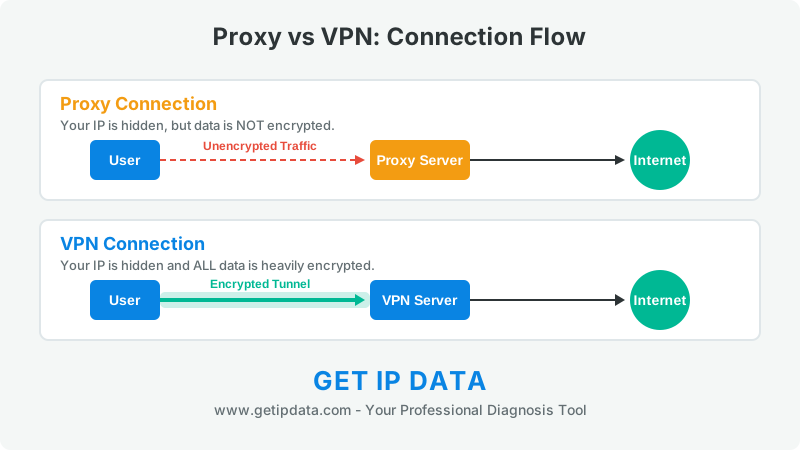
Pros of a VPN:
-
Total Encryption: A VPN encrypts 100% of your data. Nobody, not even your ISP or the government, can see your online activity.
-
System-Wide Protection: A VPN protects your entire device, including background apps, games, and browsers.
-
High Security: Ideal for using public Wi-Fi safely and protecting sensitive data.
Cons of a VPN:
-
Speed Reduction: Because of the heavy encryption process, a VPN might slightly slow down your internet speed.
-
Cost: High-quality, reliable VPNs usually require a paid subscription.
The Key Differences: At a Glance
-
Security: VPNs use high-level encryption (like AES-256), while Proxies use little to no encryption.
-
Coverage: VPNs encrypt your entire network connection. Proxies only work on an app-by-app basis.
-
Privacy: Premium VPNs have strict "No-Logs" policies. Free proxy owners can easily monitor and log your web traffic.
-
Use Case: Use a Proxy for simple tasks like bypassing a quick website block. Use a VPN for downloading, sensitive browsing, and total digital privacy.
Conclusion: Which one should you choose? If your only goal is to watch a quick YouTube video blocked in your country, a Proxy will get the job done quickly and for free.
However, if you care about your online privacy, frequently use public Wi-Fi, or want to keep your browsing history safe from your ISP and hackers, a VPN is the absolute winner. In the modern digital age, the encryption provided by a VPN is not just an extra feature; it is a necessity.