Introduction When you decide to hide your IP address or bypass internet restrictions, using a proxy is one of the most effective solutions. However, as you start looking for a proxy service, you will immediately face a major question: Should you buy a Datacenter Proxy or a Residential Proxy?
While both types of proxies hide your real IP address, the way they are created and how websites view them are completely different. Choosing the wrong one can lead to instant bans or a waste of money. Here is everything you need to know to make the right choice.
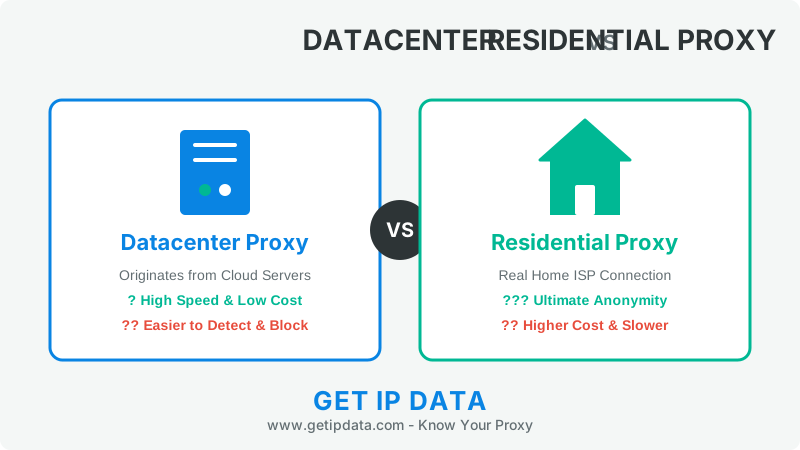
What is a Datacenter Proxy? A datacenter proxy is exactly what it sounds like—an IP address provided by a secondary corporation, typically a cloud hosting provider or a massive data center (like Amazon Web Services or Google Cloud). These proxies are entirely independent of normal Internet Service Providers (ISPs).
Pros of Datacenter Proxies:
-
Blazing Fast Speeds: Since they are hosted on commercial servers with massive bandwidth, they offer incredible internet speeds.
-
Highly Affordable: They are much cheaper to produce and maintain, making them very budget-friendly.
-
High Availability: You can easily buy them in bulk.
Cons of Datacenter Proxies:
-
Easily Detectable: Because the IP address belongs to a data center and not a real home internet provider, strict websites (like Netflix, Amazon, or sneaker-buying sites) can easily detect and block them.
What is a Residential Proxy? A residential proxy provides you with an IP address tied to a physical device (like a mobile phone or a desktop computer) and a real Internet Service Provider (ISP) such as Comcast, AT&T, or Jio. When you use a residential proxy, your internet traffic looks exactly like a regular person browsing from their home.
Pros of Residential Proxies:
-
Ultimate Anonymity: They are almost impossible to detect. To any website, you just look like a normal user sitting in a house.
-
Fewer Blocks and Bans: Ideal for complex tasks like web scraping, managing multiple social media accounts, or bypassing strict geo-blocks.
Cons of Residential Proxies:
-
Slower Speeds: Your connection is routed through another person's physical internet connection, which might not be as fast as a commercial server.
-
High Cost: Because they are hard to source, residential proxies are significantly more expensive than datacenter ones.
Key Differences at a Glance
-
Trust Level: Residential proxies have a very high trust score. Datacenter proxies have a lower trust score and trigger security captchas more often.
-
Cost: Datacenter proxies are cheap; Residential proxies are a premium product.
-
Speed: Datacenter proxies win the speed race by a large margin.
Conclusion: Which one should you choose? If your goal is to browse the internet quickly, hide your IP from basic trackers, or play region-locked games, a Datacenter Proxy is fast, cheap, and gets the job done perfectly.
However, if you are a business professional doing data scraping, sneaker botting, or running multiple social media accounts where getting blocked is a major risk, you absolutely need the undetectable nature of a Residential Proxy.
Looking for the best proxy provider? Check out our top-rated proxy tools in the menu above!